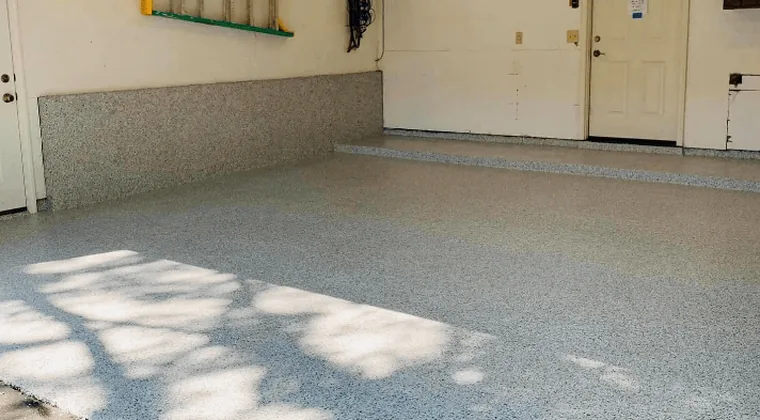
A professionally installed residential epoxy floor in metro Atlanta lasts roughly 10 to 20 years. Commercial floors run about 5 to 10 years under heavy traffic, while a cheap or poorly prepped floor with no diamond grind and no moisture test can fail in 1 to 3 years. In metro Atlanta, two things decide where your floor lands in that range: the prep underneath, and how the slab is protected against road brine and the moisture that follows a storm.
From Sandy Springs's creek homes to the suburban garages on Decatur and Suwanee, a lot of metro Atlanta flooring takes a beating most of the country never sees. Winter road brine comes home on the tyres, summers run humid from June through September, and a single tropical system can leave a garage slab wet for days. So when a homeowner here asks "how long does an epoxy floor last," the honest answer is a range, not a single number, and the floors that hit the top of it are the ones built for this specific metro area, not a generic garage anywhere.
Two floors poured from the identical resin can perform a decade apart, because the resin is just the visible skin of a system that lives or dies on what happens before the first coat goes down. This guide lays out realistic lifespans by system, what quietly shortens a floor in metro Atlanta's clay-and-freeze climate, and how a rental or full-time owner can stretch every year out of the one they have. For the dollars, our metro Atlanta cost guide breaks down what each system runs to install.
Epoxy Floor Lifespan by System
Not all epoxy floors are built to last the same length of time, because not all of them are the same product. A weekend kit grabbed off a shelf in Sandy Springs and a professionally diamond-ground, polyaspartic-topped flake system are separated by a decade or more of service life. Here is how the common systems stack up when they are installed correctly on a properly prepared metro Atlanta slab, where summer humidity gives the cheap end of the table an even shorter leash than it would have inland.
| System | Typical Lifespan | Best For |
|---|---|---|
| DIY paint / roll-on kit | 1–3 years | Quick cosmetic refresh; rentals and short-term spaces |
| Solid-color professional | 10–15 years | Utility garages, storage, budget-conscious projects |
| Flake + polyaspartic topcoat | 15–20 years | The default Sandy Springs / Atlanta garage; best metro Atlanta value |
| Quartz / industrial | 15–20+ years (commercial) | Kitchens, clinics, warehouses, heavy traffic |
| Metallic with UV-stable topcoat | 10–20 years | Showpiece interiors, showrooms, designer floors |
The pattern is hard to miss. The cheapest option has the shortest life by a wide margin, and the difference is not the color or the gloss, it is the bond and the topcoat. A DIY kit skips the diamond grind, skips the moisture test, and tops out with a thin consumer-grade sealer, which is why it peels in a year or two, sometimes by the end of a single wet spell. A professional flake-and-polyaspartic system is engineered for the road brine, the freeze-thaw moisture, and the heat of metro Atlanta, which is why it routinely doubles or triples the lifespan of anything a homeowner can roll on themselves. On a seasonal home that sits empty and closed-up for months at a time, that gap matters even more, because nobody is there to catch a problem before it spreads.
What Shortens an Epoxy Floor's Life in metro Atlanta
Most early failures are not random. They trace back to a handful of conditions, and in metro Atlanta several of them hit harder than they would almost anywhere else in the country. Salt, freeze-thaw moisture, and months of an empty seasonal home all stack on top of the usual wear. Understanding them is how you tell a floor built to last from one quietly engineered to fail.
Winter Road Brine
This is the factor metro Atlanta owners underrate the most. From Sandy Springs's thousands of creek-bottom lots to the newer garages in Suwanee, Alpharetta, and Johns Creek, winter road brine comes home on the tyres and settles on every surface it can reach. Salt is hygroscopic, meaning it pulls and holds moisture against a floor, and it works into any seam, edge, or open bay where a coating is thinnest. On a closed garage it is a slow background wear; on an open-bay shop, an uncovered patio, or a detached garage left open to the breeze, it accelerates surface breakdown and chews at weak edges first. Metro Atlanta floors here need thicker, more chemically resistant systems and a UV-stable topcoat to push back against it, which is exactly why a bargain coating that survives inland fails fast within a few blocks of the water.
Freeze-Thaw Moisture and Damp Clay Subgrade
metro Atlanta sits on red clay that holds slab moisture only feet below many slabs, and the June-to-October wet spell keeps that table topped up. A large share of garages here continuously push moisture vapor up through the concrete, and a tropical system can leave a slab saturated for days while an owner is away. When that vapor hits the underside of a coating, it builds pressure and lifts the floor from beneath, causing bubbling and delamination no topcoat can stop. A floor can look flawless through one winter and then blister out the following summer, and trapped moisture is almost always the reason. The fix is not a better resin, it is testing the slab before the job and installing a moisture-mitigation primer wherever the readings demand it.
UV and the Subtropical Sun
The metro Atlanta sun is relentless ten months a year, and it punishes any coating that is not UV-stable. A standard epoxy topcoat will amber, yellow, and chalk over time wherever it catches direct sun, whether that is a Sandy Springs garage with the bay door rolled up all afternoon or a sun-flooded screened porch or sunroom floor. That fading is not just cosmetic, it signals the topcoat breaking down and losing its protective value. A UV-stable polyaspartic or polyurea topcoat is what keeps a metro Atlanta floor holding its color for its full lifespan instead of going dull and patchy within a couple of winters.
Heat and Hot-Tire Pickup
Year-round heat keeps slab and tire temperatures high here, and hot tires are tougher on a garage floor than most people realize. After a drive across town in August, the hot rubber can grab a weakly bonded or undercured surface and peel it up when the car pulls away. That is hot-tire pickup, a classic symptom of a thin or poorly bonded floor, and it shows up fastest on the cheap kits sold to do-it-yourselfers. A properly ground, fully cured professional system with a polyaspartic topcoat shrugs it off; a roll-on coating in this heat often does not.
Poor Surface Prep: Acid Wash vs. Diamond Grind
If salt and moisture set the difficulty level, weak prep is what lets them win. A real installation opens the concrete with a diamond grinder so the coating can mechanically key into the slab. A cheap shortcut substitutes an acid wash, which etches the surface lightly but never creates a true bond. Acid-washed floors look fine on day one and start lifting at the edges within months. On a clay-bedded Atlanta slab where trapped moisture already attacks the bond, skipping the grind is close to a guarantee of early failure, no matter how good the resin poured on top of it is.
Want a Floor Built to Last in Metro Atlanta?
Tell us about your slab, your bay doors, and how close you are to the water. We test for moisture, prep with a diamond grind, and finish with a UV-stable topcoat built for road brine and freeze-thaw season, free estimate first.
What Extends an Epoxy Floor's Life
The flip side of every failure cause is a way to add years. The same salt, moisture, and heat that wreck a floor, when they are planned around instead of ignored, are what push a metro Atlanta system to the top of that 10-to-20-year range and keep it looking new the whole way through. Here is what actually moves the needle on metro Atlanta.
- Proper diamond-grind prep. A mechanically ground slab gives the coating a true bond, which is the foundation every other year of life is built on. No grind, no longevity, and on a brine-exposed slab that is doubly true.
- Moisture testing and mitigation. Testing the slab before the job, and installing a mitigation primer where the readings call for it, is what stops the clay-held slab moisture and a saturated rainy-season slab from lifting the floor from underneath.
- A UV-stable polyaspartic topcoat. This is the layer that takes Georgia clay sun, the salt, and the traffic. It resists ambering, hot-tire pickup, and abrasion, and it is the sacrificial layer you renew over time instead of the whole floor.
- Rinsing off the salt. A garage open to the breeze a few blocks from the water collects salt film; a periodic rinse and dust-mop keeps it from sitting on the finish and from being ground in underfoot. Metro Atlanta floors simply need this more often than inland ones.
- Recoating on schedule. Refreshing the topcoat roughly every 5 to 10 years renews the wear layer and the UV protection long before the base coat is ever at risk. It is the cheapest longevity insurance there is, and easy to fold into the spring trip back for a seasonal owner.
- Avoiding harsh chemicals. Skip the aggressive acids, solvents, and abrasive pads. Mild cleaners protect the finish; harsh ones strip and dull it ahead of schedule.
None of this is exotic. It is the difference between treating the floor as a finished metro Atlanta system that gets a little upkeep and treating it as a one-and-done slab of paint. For the full routine, our guide on how to clean and maintain an epoxy floor in metro Atlanta covers what to do and what to avoid.
Residential vs. Commercial Lifespans
The gap between a 10-to-20-year residential floor and a 5-to-10-year commercial floor is not about quality, it is about workload. A Sandy Springs home garage sees a couple of vehicles, the occasional dropped tool, and light foot traffic. A commercial floor along Roswell Road or out in the Peachtree Corners and metro-Atlanta warehouse districts lives a much harder life, and the surface pays for it.
In a warehouse or shop, the same coating faces forklifts and pallet jacks rolling steel wheels across it, constant foot traffic in concentrated lanes, dropped loads and impact, and aggressive cleaning chemicals applied daily. Each of those grinds the topcoat down faster than anything a home floor ever encounters, which is why commercial systems are specified thicker and harder, and why their recoat intervals come sooner. A quartz or industrial system carries that load best, which is exactly why restaurant kitchens, medical clinics, and the region's distribution warehouses lean on it. Add an open dock bay near the water and the salt exposure pulls those intervals in even tighter.
The takeaway is not that commercial floors are worse, it is that they are scheduled differently. A well-run commercial floor reaches the top of its range because the operator plans a recoat into the cycle rather than waiting for the surface to fail. Match the system to the traffic and the salt exposure, plan the maintenance, and the lifespan follows.
Signs of Wear: Recoat or Replace?
When a floor starts showing its age, the most expensive mistake is assuming it needs to be torn out. Often it just needs a fresh topcoat. The deciding factor is the bond to the slab, and after a humid summer or a hard freeze that bond is worth checking before you spend a dime. If the coating is still firmly stuck down, you almost certainly have a recoat job. If it has lost its grip on the concrete, you are looking at a replacement.
When a Recoat Is Enough
If the floor is dull, lightly scratched, scuffed, sun-faded, or carrying a haze of salt film but still bonded solidly to the slab, it is a recoat candidate. The wear is in the sacrificial topcoat, which is exactly what that layer is there to absorb. The floor can be cleaned, scuff-sanded, and given a fresh topcoat for a fraction of replacement cost, and it comes back looking new. Catching wear at this stage is the whole point of recoating on schedule, you renew the surface before the salt and sun ever work their way down to the base coat.
When You Need a Full Replacement
Peeling, blistering, bubbling, or delamination is a different story, and it is exactly what an untested clay-bedded slab tends to produce after a soaking wet spell. Those symptoms mean the bond has failed, usually because moisture pushed up through the concrete or because the original prep never created a real bond in the first place. You cannot recoat over a floor that is lifting; a new topcoat on a failed bond fails right along with it. That floor needs to be ground off and reinstalled correctly, with a moisture test and proper prep this time. If your floor is showing those signs, our guide on why epoxy floors fail in metro Atlanta and the moisture test that prevents it explains what went wrong and how to stop it from happening again.
Frequently Asked Questions
How long does an epoxy garage floor last in Atlanta?
A professionally installed epoxy garage floor in the Atlanta area typically lasts 10 to 20 years. A solid-color system runs about 10 to 15 years, while a flake floor finished with a UV-stable polyaspartic topcoat reaches 15 to 20, even within a few blocks of Georgia clay. A cheap DIY roll-on kit often fails within 1 to 3 years here, sometimes inside a single wet spell. The biggest factor is the prep underneath and a topcoat chosen for road brine, not the brand of resin on top.
How often should an Atlanta epoxy floor be recoated?
Plan to refresh the topcoat roughly every 5 to 10 years, sooner on a brine-exposed open bay or a high-traffic commercial floor and later on a closed residential garage. Recoating renews the sacrificial wear layer and the UV protection long before grit and Georgia sun reach the base coat. On a rental, folding it into the spring turnover is easy, and catching wear at the dull-and-hazed stage is far cheaper than waiting until the floor delaminates and needs a full replacement.
Does metro Atlanta road brine and humidity shorten epoxy floor life?
It can, but mostly when prep and the topcoat are wrong. Road brine holds moisture against a coating and works into thin edges, and metro Atlanta's clay-held slab moisture pushes vapor up through the slab through the wet spell. Without a moisture test, a mitigation primer, and a UV-stable salt-tough topcoat, those forces lift and dull a floor early. A correctly tested, sealed, and topcoated floor handles metro Atlanta for its full expected life; it is skipped prep, not the climate, that cuts a floor short.
Can you recoat an epoxy floor instead of replacing it?
Yes, as long as the bond to the slab is still sound. If the floor is simply dull, lightly scratched, sun-faded, or carrying salt haze but firmly adhered, it can be cleaned, scuff-sanded, and given a fresh topcoat for a fraction of replacement cost. Replacement is only necessary when the coating is peeling, blistering, or delaminating, which on metro Atlanta usually points to a rainy-season moisture or bond failure that a recoat cannot fix.
How long does commercial epoxy last in the Atlanta area?
Commercial epoxy floors around Atlanta generally last 5 to 10 years before they need a recoat or refinish, because they take far more abuse than a home floor. Forklifts and pallet jacks in the Peachtree Corners warehouse districts, constant foot traffic, dropped tools, and daily cleaning chemicals all wear the surface faster, and a dock bay open to road brine pulls the interval in tighter still. Heavy-duty quartz and industrial systems sit at the top of that range, and a scheduled recoat extends them well beyond it.
What makes an epoxy floor fail early in metro Atlanta?
Almost every premature failure traces back to prep and the wrong topcoat, not the resin itself. The usual causes here are no diamond grind (an acid wash instead), a skipped moisture test on an untested clay-bedded slab that soaks through the wet spell, a non-UV-stable topcoat that ambers in Georgia clay sun, and salt working into thin or consumer-grade coatings near the water. Hot-tire pickup in the heat finishes off floors that were already poorly bonded. Done right for metro Atlanta, the floor lasts for decades.
Get Your Free metro Atlanta Epoxy Quote
The honest answer to how long an epoxy floor lasts in metro Atlanta is that it depends almost entirely on how it is installed for this specific climate. A tested slab, a diamond grind, the right salt-and-UV-tough topcoat, and a little routine care add up to a floor that serves your home for 10 to 20 years through every wet spell. Skip those steps near the water and you are buying a floor with an expiration date measured in months. The good news is that the difference is fully in your control, and it starts with hiring an installer who treats the prep as the job, not an afterthought.
Ready to start? Call Blake's crew at (404) 974-2647 or request a free quote online. We serve Sandy Springs, Brookhaven, Suwanee, Dunwoody, Johns Creek, Alpharetta, Peachtree Corners, Roswell, Decatur, Marietta, and the surrounding communities across metro Atlanta and metro Atlanta.
Related Articles
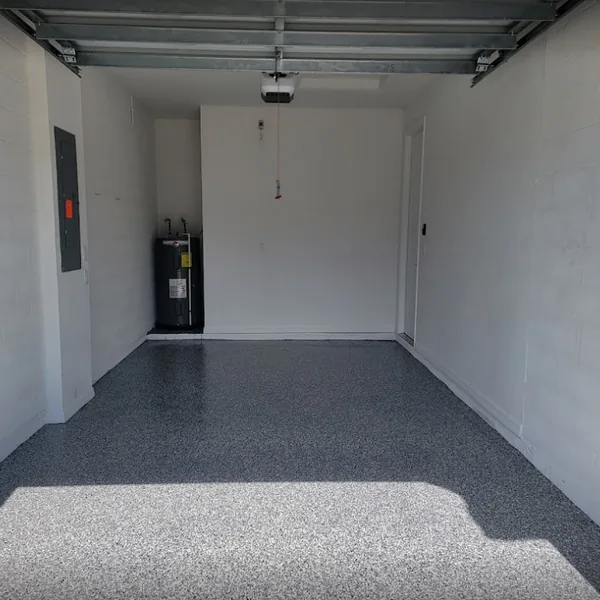
How to Clean and Maintain an Epoxy Floor in metro Atlanta
The simple routine that keeps a floor looking new in metro Atlanta.
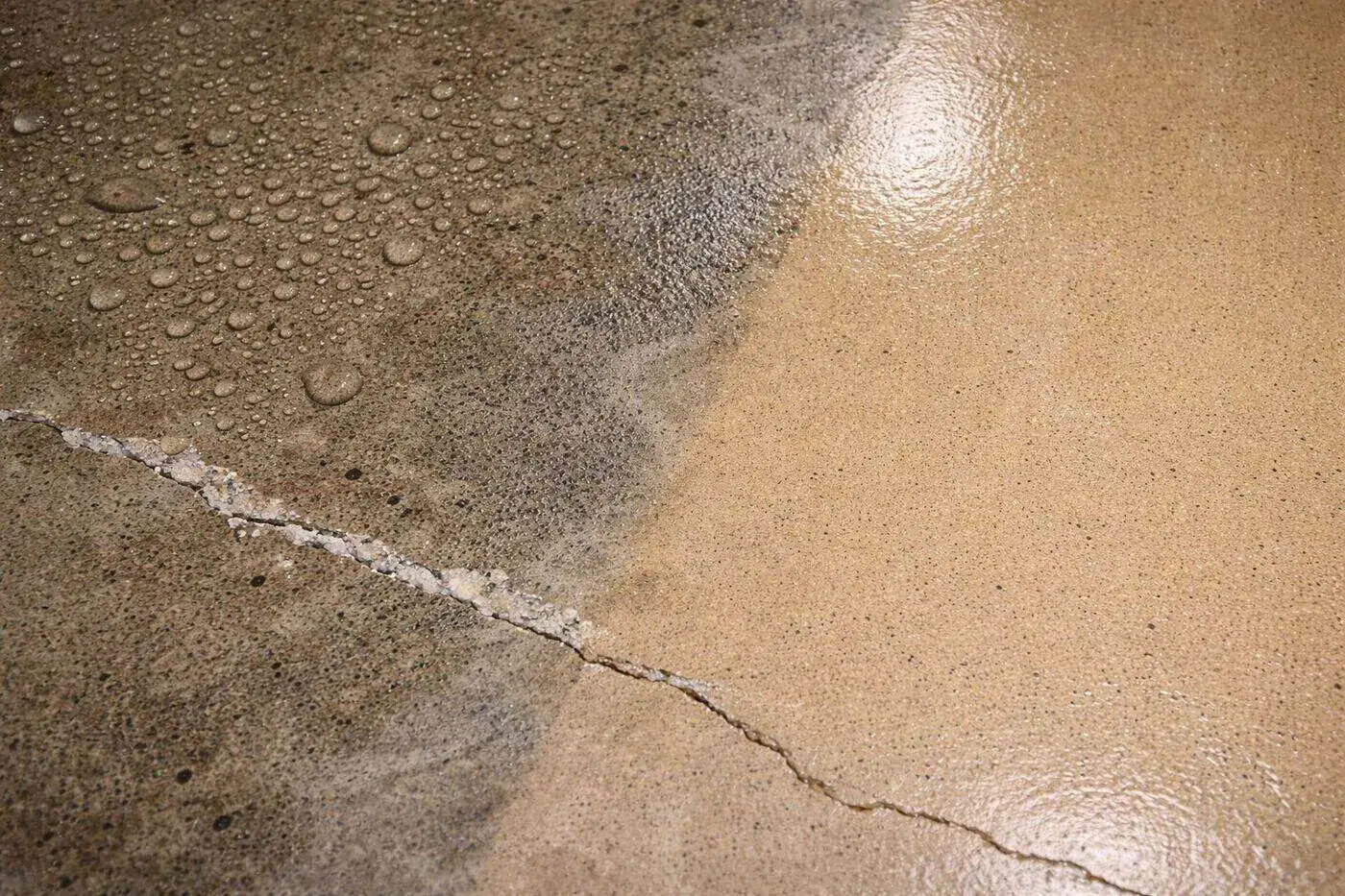
Why Epoxy Floors Fail in metro Atlanta — and the Moisture Test That Prevents It
The clay-held slab moisture, MVT testing, and what to ask before you sign.
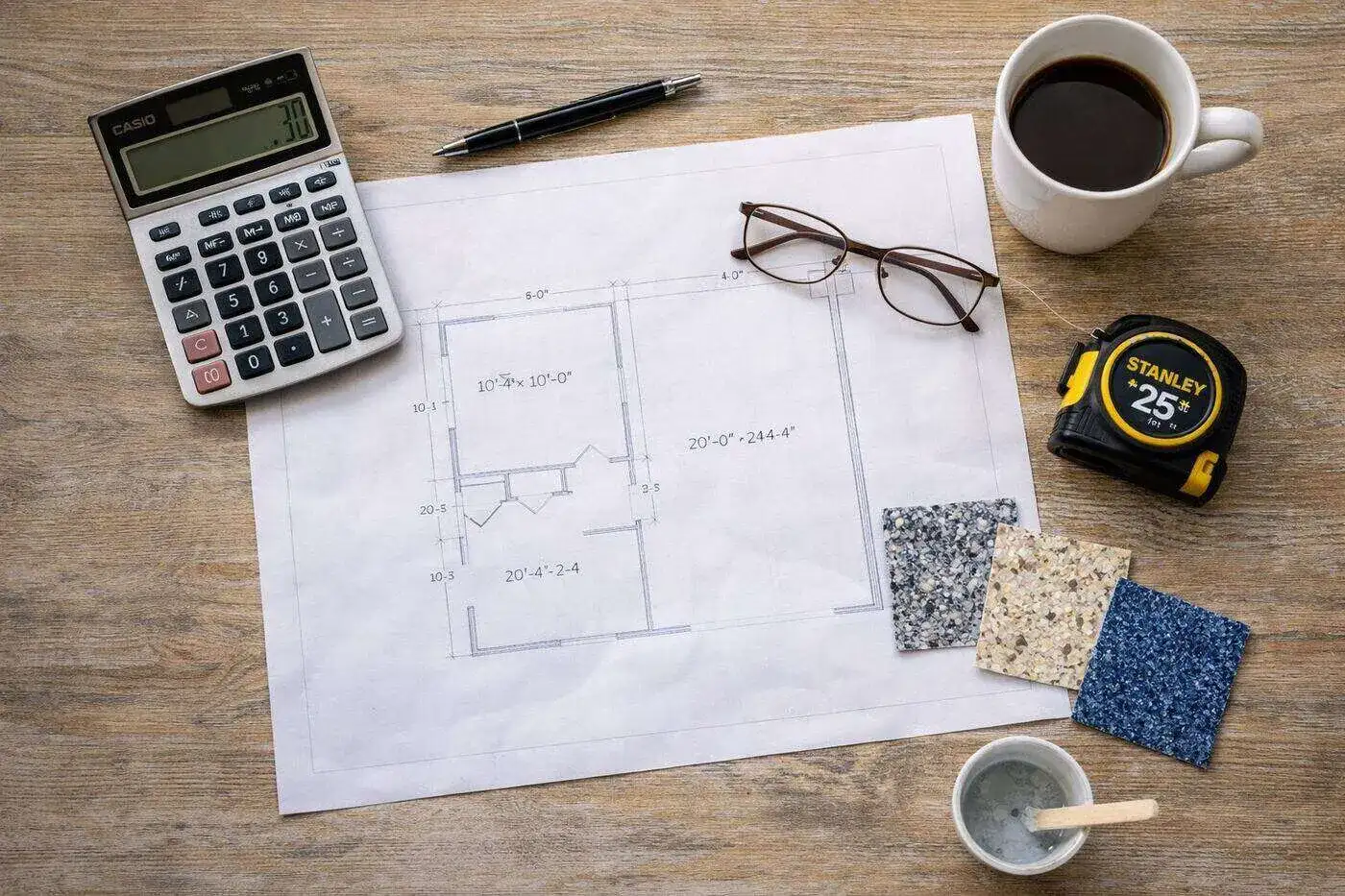
How Much Does Epoxy Flooring Cost in metro Atlanta? (2026 Guide)
Real prices by finish and a typical 2-car garage total.