Commercial Epoxy Flooring in Atlanta — Built for Road Brine and Freeze-Thaw
Metro Atlanta metro Atlanta is hard on commercial floors. We install sealed, chemical-resistant epoxy systems for Atlanta restaurants, kitchens, retail showrooms, offices, and medical suites — engineered around our brine-laden humidity, ice storm recovery, and the in-season rush that hits metro Atlanta every winter.
Why Atlanta Commercial Floors Take More Abuse Than Most
Run a business near the water in metro Atlanta and you already know the floor is the part of the building that takes the beating. Red-clay grit and winter road brine ride in on every shoe, cart wheel, and delivery dolly, then sits on a slab that almost never fully dries out in our humidity. Tile grout darkens, sealed concrete hazes, and ordinary store-bought floor paint lifts at the edges within a season. Commercial epoxy solves that differently: a bonded, monolithic surface with no grout lines and no seams for salt, grease, or bacteria to work into.
The other thing that sets Atlanta apart is the calendar. Two realities drive how we schedule and spec every commercial job here:
- The season swings. A restaurant on Decatur Square or a showroom off Peachtree Road can triple its traffic between the summer lull and the winter rental rush. We try to coat in the slower months so the floor is fully cured and ready before the in-season crowds arrive.
- A hard freeze is a when, not an if. After an ice storm pushes water through a commercial space, a sealed epoxy floor cleans, dries, and sanitizes far faster than carpet, VCT, or bare concrete — which is exactly why so many metro Atlanta owners switched to epoxy after the last few freeze-thaw seasons.
So before we ever open a kit of resin, we deal with the moisture. As our moisture-failure guide spells out, most metro Atlanta commercial slabs are poured on grade over a high clay-bedded slab moisture, which drives vapor up through the concrete and is the number-one reason a coating delaminates here. We run an ASTM moisture test on every commercial slab, diamond-grind for a real mechanical bond, and switch to a vapor-barrier primer when the readings come back high. That step is non-negotiable in metro Atlanta and it is the difference between a floor that lasts a decade and one that bubbles by next wet spell.
Commercial epoxy fits the kinds of Atlanta spaces we coat most often:
- Restaurants, bars, breweries, and commercial kitchens — including Decatur Square and Midtown spots
- Retail stores and showrooms along the Peachtree Road and Piedmont Road (GA-400) corridors
- Medical, dental, and veterinary suites that need a sanitary, sealed surface
- Hospitality, resort, and short-term-rental common areas built for seasonal turnover
- Offices, lobbies, and professional suites across the Peachtree Corners and Ashford Dunwoody Road corridors
Got a forklift-rated warehouse or a manufacturing slab instead? That belongs on heavier polyaspartic and urethane systems — see our industrial epoxy flooring page. Want real numbers first? Our commercial epoxy guide for Atlanta walks through systems and costs by business type.
What This Floor Does for a metro Atlanta Business
Six reasons Atlanta owners pick epoxy over tile, VCT, and floor paint — starting with the things that matter most in this climate.
Off-season
Scheduled Around Your Season
We aim to coat during the summer slow stretch so your floor is fully cured before the rental rush hits. Phased, weekend, and after-hours scheduling keeps a Atlanta restaurant or store open and earning while we work.
Storm-ready
Cleans Up Fast After a Flood
When storm water gets into a metro Atlanta building, a sealed epoxy floor dries, scrubs, and sanitizes in hours — not the days carpet or VCT demand. No soaked subfloor, no mold trapped under tile. It is why many metro Atlanta owners re-floored in epoxy after recent freeze-thaw seasons.
Sealed
Salt, Grease & Chemical Resistant
The non-porous topcoat shrugs off the clay grit and winter brine tracked in off Atlanta streets, plus kitchen grease, cleaning chemicals, and daily spills — none of it stains or eats into a properly sealed Atlanta floor.
Wet-rated
Slip-Resistant for Rainy-Season Traffic
Our daily afternoon downpours mean wet shoes at every Atlanta entryway from June through September. Anti-slip aggregate and textured finishes keep entries, kitchens, and in-town patios safe and OSHA-friendly when the floor gets tracked with rain.
10-20 yrs
Outlasts Freeze-Thaw
A multi-layer commercial system, installed over a properly moisture-tested slab, holds up 10 to 20 years here — long past the point where humidity-curled VCT and edge-lifting floor paint would have been torn out and replaced twice.
How long epoxy lasts in Atlanta →FDA/USDA
Health-Code-Ready & Low-Maintenance
Seamless and non-porous, our systems meet FDA and USDA food-contact guidelines — no grout for bacteria to hide in, and a daily dust-mop is all the upkeep a busy Atlanta kitchen or clinic floor needs. No waxing, no stripping, no specialty crew.
See the Atlanta pricing guide →Our Atlanta Install Process
Five steps, built around the two things that sink commercial floors in metro Atlanta — slab moisture and bad timing. Here is how we get it right.
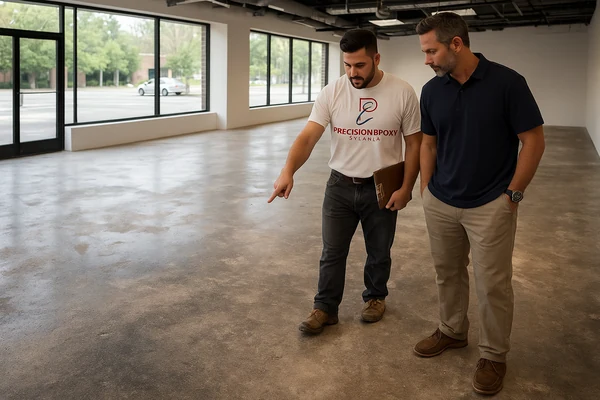
Consultation & Site Assessment
~45 minWe walk your Atlanta space, read the existing concrete, measure square footage, and talk through your traffic and your in-season vs. off-season swing so we can time the work around your busiest months. Schedule yours free.
Custom System Design
1–2 daysWe spec the system to your business and our climate — vapor-barrier primer, base coat, color, anti-slip texture, and a UV-stable topcoat that resists salt and metro Atlanta sun. For larger spaces we map a phased plan so you keep serving customers while we coat section by section.
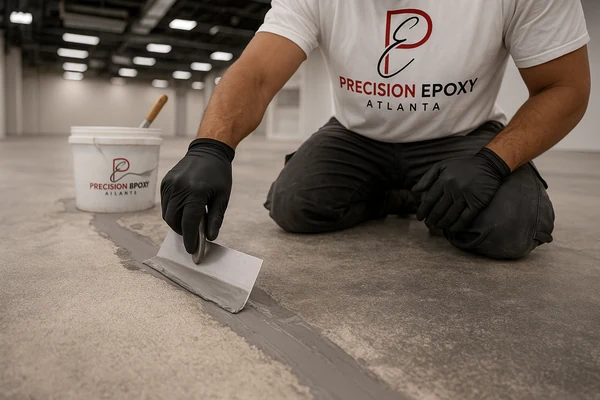
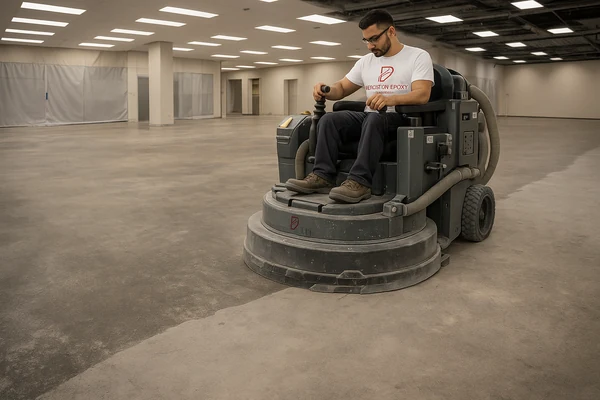
Surface Preparation
2–4 hrsWe diamond-grind and profile the slab for a true mechanical bond, then run an ASTM moisture test on every floor. Over metro Atlanta's high clay-bedded slab moisture that reading decides everything — high numbers mean a vapor-barrier primer goes down before any color does.
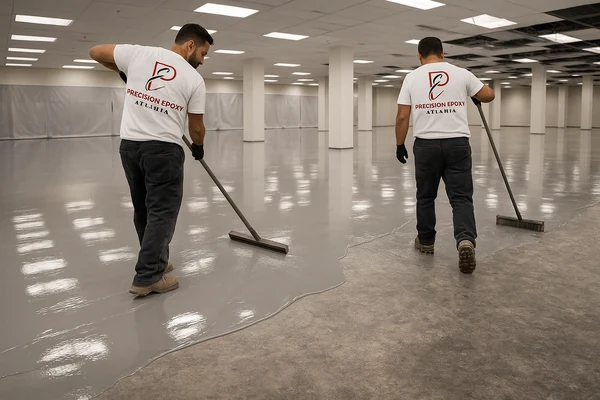
Multi-Layer Application
3–5 hrsBlake's crew lays down primer, body coat, broadcast media (flake, quartz, or metallic), and the UV-stable topcoat. On phased jobs we coat one zone at a time so your team keeps working — and we lean on fast-cure chemistry to beat the afternoon humidity and get you back open sooner.
Final Walkthrough & Handoff
~1 hrWe walk the finished floor with you, verify adhesion and finish quality, and hand over a written care guide tuned to your space — including how to keep salt and grit from grinding the surface down. Every install is backed by our written warranty.
Beat the Season — Step 1 Is Free.
Book a no-obligation walkthrough and see finish samples in your Atlanta space before the in-season rush.
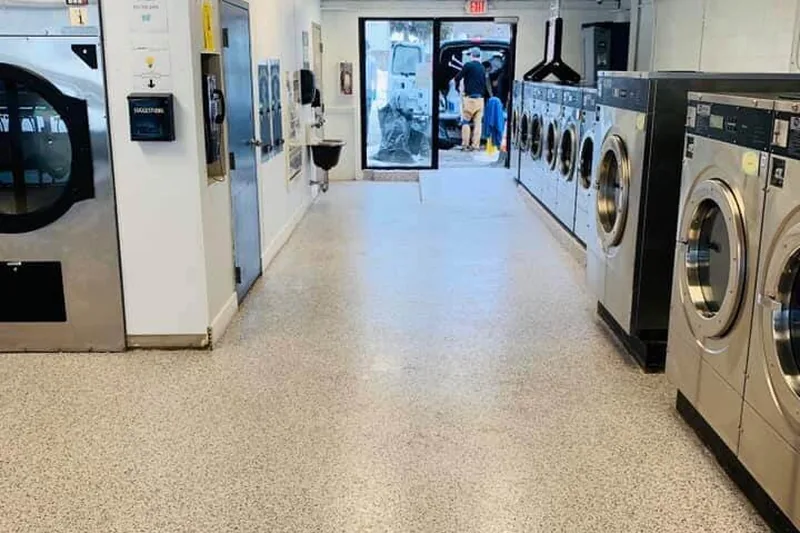
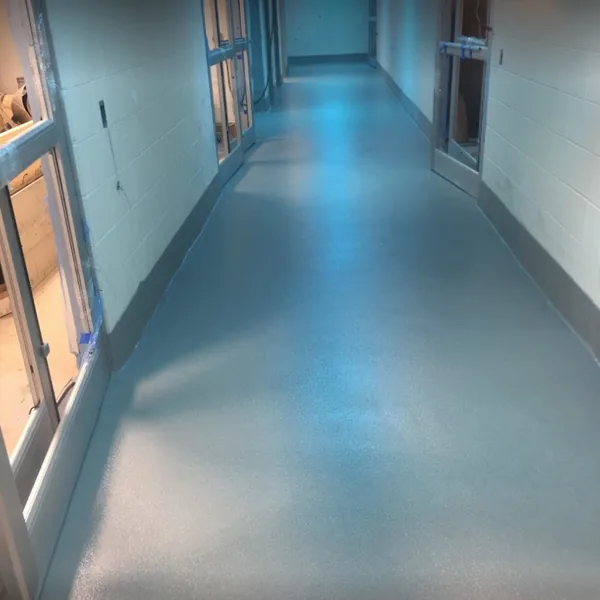
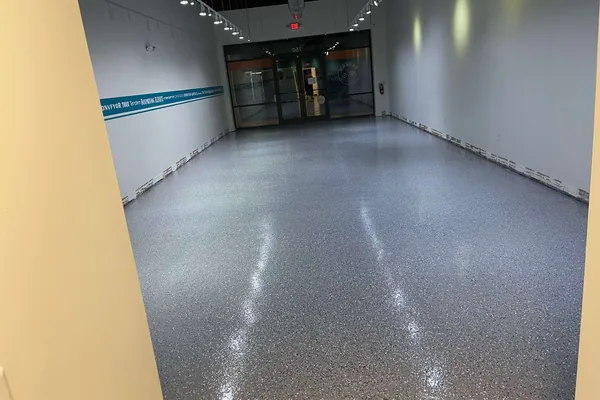
Commercial Floors We've Coated Around Atlanta
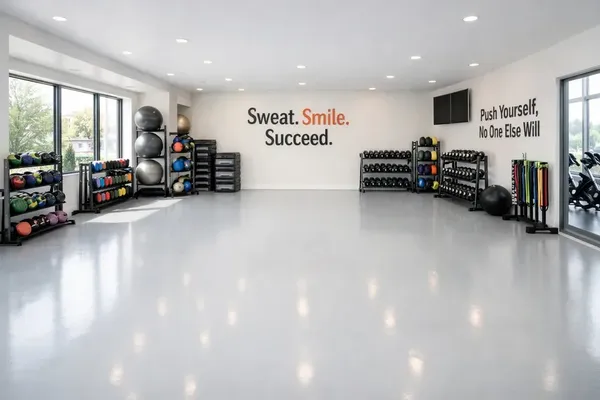
Restaurants, showrooms, offices, and shops across metro Atlanta — coated by Blake's local crew.
Floors Built for the Toughest Atlanta Rooms
A standard epoxy won't survive a working kitchen or a food-packing line in our climate. These two rooms get a heavier-duty, regulation-grade system.
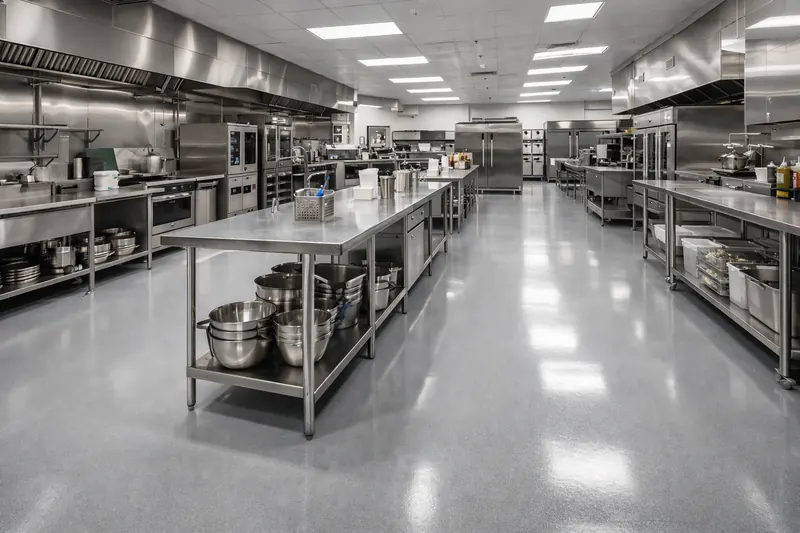
Commercial Kitchen Flooring
A Atlanta kitchen punishes a floor from every direction at once: thermal shock from boiling stockpots and fryer grease, a slab that's wet most of the shift, harsh degreasers at close, and a Georgia Department of Health inspector who wants a seamless, non-porous surface with nowhere for bacteria to take hold. Standard decorative epoxy simply won't take that beating.
For our busiest in-town restaurants, breweries, and catering kitchens we install urethane-cement and high-performance epoxy systems that can. They come with built-in anti-slip texture, an integral cove base that closes the wall-floor seam, and a drainage slope that actually moves water — everything you need to clear a Georgia DOH inspection and keep your line cooks on their feet during a packed in-season service.
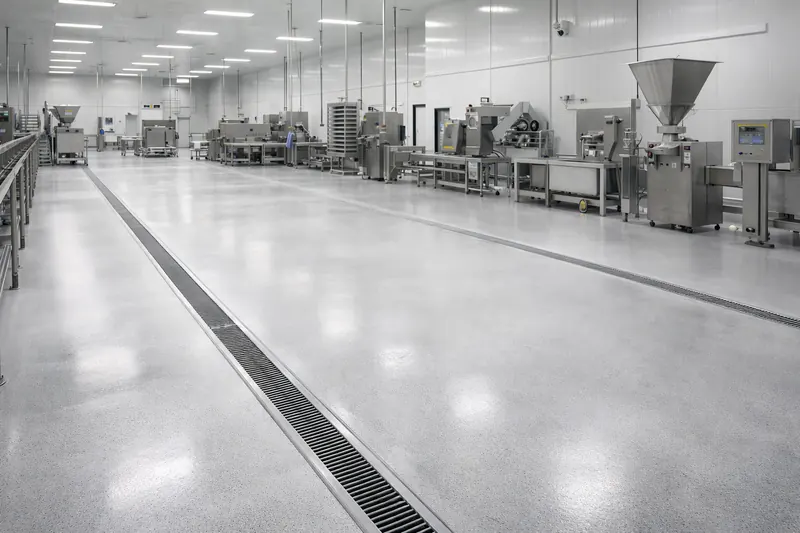
Food Packing & Processing Plant Floors
metro Atlanta runs on distribution — poultry and produce processing, beverage and cold-storage operations all work under strict USDA and FDA sanitation rules that spec the floor down to surface porosity, chemical resistance, and cleanability. That floor is a control point in your HACCP plan, and a cracked or hazed surface can fail an audit and stop your line cold.
We install USDA-accepted systems built for metro Atlanta packing and processing rooms: antimicrobial additives, seamless coverage with zero joints, resistance to CIP (clean-in-place) wash-downs, and integrated drainage. And because these slabs sit on grade over our high clay-bedded slab moisture, moisture is the make-or-break factor — we ASTM-test every floor and lay a vapor barrier when the readings call for it, so the coating never delaminates from the bottom up.
Rated 5.0★ — Atlanta Reviews
Real reviews from real metro Atlanta customers — verified on Google.
"As a property manager, I'm always looking for reliable vendors to work with. They exceeded my expectations when I hired them to install epoxy flooring in one of our Midtown commercial buildings."
"They did metallic epoxy in our office lobby, super sleek and durable. The whole space feels upgraded."
"Prompt, professional, and high-quality work. My business in Alpharetta looks great!"
Commercial Epoxy Flooring FAQ — metro Atlanta
Common questions from metro Atlanta business owners about commercial epoxy floor installation.
Commercial epoxy flooring in metro Atlanta typically costs $7 to $15 per square foot installed. The final price depends on the size of your space, the condition of the existing concrete, the type of epoxy system required, and any specialized features like anti-slip aggregate or chemical-resistant topcoats. Larger commercial spaces often benefit from lower per-square-foot pricing due to economies of scale.
For a detailed breakdown by project type, see our Atlanta epoxy pricing guide.
Yes, we specialize in phased installation schedules that keep your metro Atlanta business operational during the coating process. For restaurants, retail stores, and offices, we can work in sections — completing one area while you continue using the rest. We also offer weekend and after-hours installation to minimize impact on your daily operations.
Most commercial projects are completed within 3 to 5 days depending on square footage and system complexity.
Yes. Our commercial epoxy systems meet FDA and USDA guidelines for food-contact surfaces when properly installed and sealed. The seamless, non-porous finish prevents bacteria buildup and makes daily cleaning fast and effective — a major advantage for metro Atlanta restaurants navigating health code inspections.
We also offer antimicrobial additive options for commercial kitchens and food preparation areas that need an additional layer of protection.
Properly installed commercial epoxy flooring lasts 10 to 20 years in high-traffic metro Atlanta businesses. The lifespan depends on the type of traffic your space receives, the epoxy system thickness, and how well the floor is maintained.
Our commercial-grade systems use multi-layer applications with industrial topcoats designed to withstand heavy daily use without yellowing, peeling, or wearing through — even in metro Atlanta's humid conditions.
Yes. We serve the entire I-75, GA-400, and SR-82 corridor including warehouse districts, distribution centers, and commercial facilities across metro Atlanta. Our metro Atlanta team regularly installs commercial and industrial epoxy floors in businesses throughout the greater Sandy Springs area.
We also serve Sandy Springs, Dunwoody, Decatur, Johns Creek, Brookhaven, Alpharetta, Roswell, Peachtree Corners, and Marietta across metro Atlanta. Visit our service areas page for the full list.